Powell Marsh Bogs and Sparrows, Day 3 - 03 Jun 2026

My plan for this morning was to drive to nearby Black Tern Bog Natural Area located off of Highway 51 south of Woodruff, WI. However, when I arrived it was just an open-water bog area next to the highway with no access and no trails. So, I decided to drive back to Powell Marsh WMA with the intention of driving around to see if there were any other access points off Powell Road. There were!
I drove Powell Road past the first Powell Marsh Road and continued to a second pulloff with a nice parking lot and marked signs for the WMA. I put on the mosquito jacket, head cover and gloves and headed out onto the fine-gravel trail. Ovenbird and Red-eyed Vireos were singing loudly from the woods on either side of the trail. I'd also pick up Least Flycatcher, Eastern Wood-Pewee, American Robin and Hermit Thrush.
The trail only ran about 60 yds before it ended at the shore of the marsh. A nice hunter's blind was erected as a wildlife viewing blind but I managed to flush a pair of Wood Ducks and several Ring-necked Ducks from the waters in front of the blind on my approach. This portion of the marsh consisted of a large, grassy lake w/ sedge marsh in the distance. Except for a few scattered Canada Geese it was empty.
I headed back toward the car along the gravel trail and found an old, un-maintained path through the heavy woods that moved along the shoreline. The ground was covered in ferns, dried grass and dried branches; it was impossible to walk without making a ton of noise. Still, I heard the "Ti-Piii" of a Broad-winged Hawk and the distant drummings of Yellow-bellied Sapsucker and Pileated Woodpecker.
I was glad I had the mosquito gear because I was swarmed by a cloud of the little bloodsuckers. No bites, though. When I reached the end of the trail it gave me another view of the grassy marsh with no birdlife to speak of. So I turned around and headed back to the car.
Continuing along Powell Road (that hugged the marsh to the left) I came upon a second Powell Marsh Road that led to a vista lookout parking area. A short walk past the boulders put me onto the dike and into a older portion of the marsh. Here the dike separated the sedge marsh on my left and a more "boggy" portion on the right with distant stands of balsa, fir and tamarack.


On the right side of the (now) trail the scene shifted to open grassland with distant stands of balsa, fir and tamarack. On the left side the remnants of a recent burn were recovering with fresh grasses and ferns.


To my right the bog held stands of taller Tamarack.


Jun 3, 2026 7:44 AM - 10:52 AM
Protocol: Traveling
2.732 mile(s)
Checklist Comments: Mostly sunny, breezy, 5-10 mph, 57F. Very dry portion of marsh.
50 species
Canada Goose (Branta canadensis) 8
Trumpeter Swan (Cygnus buccinator) 6 4 cygnets w 2 adult
Wood Duck (Aix sponsa) 2
Mallard (Anas platyrhynchos) 1
Ring-necked Duck (Aythya collaris) 3
Black-billed Cuckoo (Coccyzus erythropthalmus) 1
Sandhill Crane (Antigone canadensis) 4
Wilson's Snipe (Gallinago delicata) 4 Winnowing, flushed 1
Northern Harrier (Circus hudsonius) 1
Broad-winged Hawk (Buteo platypterus) 1
Yellow-bellied Sapsucker (Sphyrapicus varius) 1
Pileated Woodpecker (Dryocopus pileatus) 1
Northern Flicker (Colaptes auratus) 1
Eastern Wood-Pewee (Contopus virens) 1
Alder Flycatcher (Empidonax alnorum) 8
Least Flycatcher (Empidonax minimus) 1
Eastern Kingbird (Tyrannus tyrannus) 1
Blue-headed Vireo (Vireo solitarius) 1
Red-eyed Vireo (Vireo olivaceus) 8
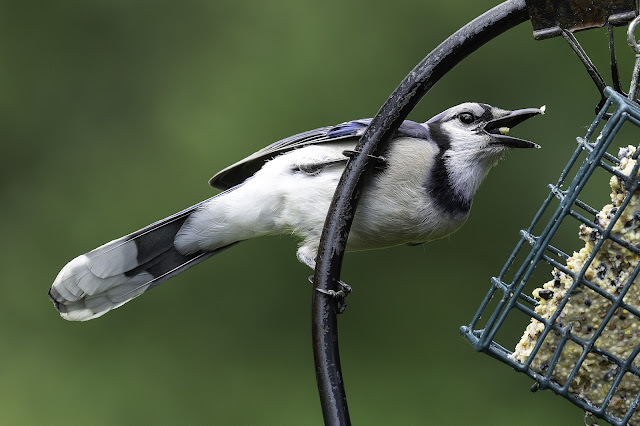
Blue Jay (Cyanocitta cristata) 2
American Crow (Corvus brachyrhynchos) 1
Common Raven (Corvus corax) 1
Black-capped Chickadee (Poecile atricapillus) 1
Tree Swallow (Tachycineta bicolor) 4
Barn Swallow (Hirundo rustica) 2
Sedge Wren (Cistothorus stellaris) 4
Veery (Catharus fuscescens) 1
Hermit Thrush (Catharus guttatus) 2
American Robin (Turdus migratorius) 1
Cedar Waxwing (Bombycilla cedrorum) 1
American Goldfinch (Spinus tristis) 2
Chipping Sparrow (Spizella passerina) 1
Clay-colored Sparrow (Spizella pallida) 4
Savannah Sparrow (Passerculus sandwichensis) 4
Song Sparrow (Melospiza melodia) 3
Lincoln's Sparrow (Melospiza lincolnii) 4
Swamp Sparrow (Melospiza georgiana) 3
Eastern Towhee (Pipilo erythrophthalmus) 1
Red-winged Blackbird (Agelaius phoeniceus) 2
Common Grackle (Quiscalus quiscula) 4
Ovenbird (Seiurus aurocapilla) 2
Nashville Warbler (Leiothlypis ruficapilla) 1
Common Yellowthroat (Geothlypis trichas) 9
American Redstart (Setophaga ruticilla) 1
Northern Yellow Warbler (Setophaga aestiva) 6
Chestnut-sided Warbler (Setophaga pensylvanica) 2
Pine Warbler (Setophaga pinus) 1
Northern Cardinal (Cardinalis cardinalis) 1
Rose-breasted Grosbeak (Pheucticus ludovicianus) 1
Indigo Bunting (Passerina cyanea) 1
View this checklist online at https://ebird.org/checklist/S3
This report was generated automatically by eBird v3 (https://ebird.org/home)



Comments
Post a Comment
Please leave a comment. I will try to respond ASAP.